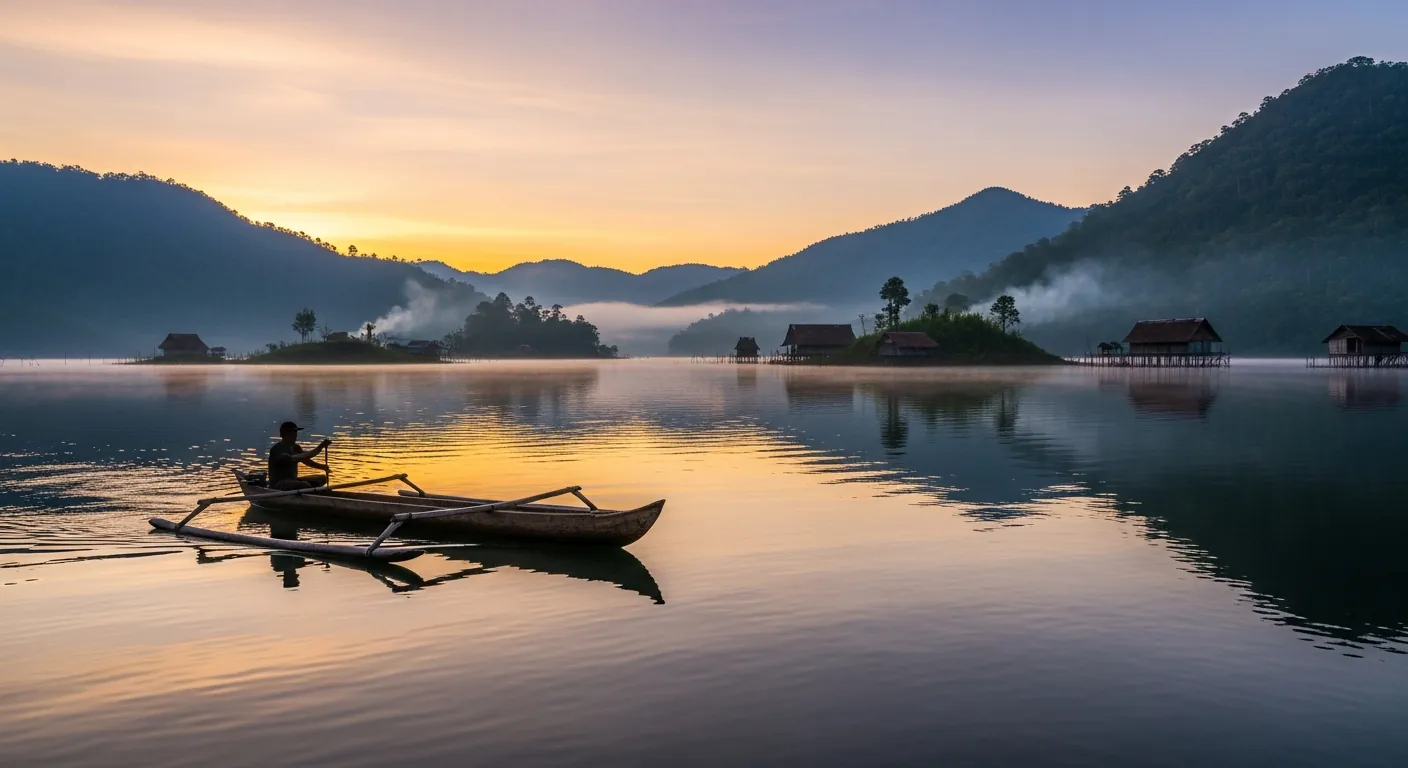
The humid air near Jayapura carries the scent of damp earth and distant woodsmoke, a prelude to the vast freshwater expanse that defines the region. From the shoreline, the lake stretches, its surface reflecting the tropical sky and the silhouettes of low-lying islands, each bearing its own stories and traditions. This is Lake Sentani, a geographic and cultural anchor in Papua, Indonesia.
Navigating Lake Sentani: Boat Tours and Island Exploration
Exploring Lake Sentani typically involves a boat tour, a direct method of accessing its many island villages and viewpoints. Independent tours from Jayapura provide a direct route to the lake, which lies about 20 kilometres from Jayapura City in Papua Province, Indonesia. A typical Jayapura City and Lake Sentani day tour lasts around 8 hours, allowing for comprehensive exploration without rush. Boats often depart from various points along the lake’s perimeter, providing access to its 21 islands. The lake itself is situated near coordinates 2.61°S 140.56°E within Jayapura Regency, a district with an area of about 79.80 square kilometres. Guided Lake Sentani tours frequently include a visit to Asey village, a significant cultural hub where visitors can meet members of the local Sentani tribe. Asey is renowned for its traditional bark-cloth paintings, a unique art form that depicts ancestral narratives and daily life. The process of making these bark cloths involves harvesting specific tree bark, processing it, and then meticulously painting intricate designs using natural dyes. These tours offer direct interaction with the artists, providing insight into the cultural significance of their work and the preservation efforts within the community. Beyond Asey, other villages offer glimpses into diverse Sentani customs and daily routines, from fishing practices to the preparation of traditional Papuan foods.
The Annual Lake Sentani Festival: A Cultural Convergence
The Lake Sentani Festival is an annual event that draws participants and spectators from across Papua and beyond, celebrating the rich cultural heritage of the Sentani people. This festival typically occurs in June, though dates can vary, and features a range of traditional performances, art exhibitions, and culinary demonstrations. The festival serves as a platform for the Sentani tribe to showcase their traditional dances, which are often accompanied by intricate costumes and rhythmic drumming. Traditional boat races, a central component of the festival, highlight the historical reliance on the lake for transport and sustenance. During the festival, the lake’s surface becomes a vibrant stage, with canoes adorned in bright colors and paddlers competing in a display of skill and communal spirit. Food stalls offer a variety of Papuan traditional foods, including papeda, a staple made from sago flour, often served with yellow fish soup. This provides an opportunity to sample authentic local cuisine prepared according to age-old recipes. The festival’s crafts markets feature items such as wood carvings, woven goods, and the distinctive bark-cloth art, offering direct opportunities to support local artisans. The mid-2023 population of Sentani District was estimated at about 84,602 people, many of whom participate in or attend the festival, reinforcing its community importance.
Sentani Tribal Villages and Bark-Cloth Art
The villages dotting Lake Sentani are not merely settlements; they are living repositories of Sentani culture and tradition. Asey village stands out for its preservation of bark-cloth art, a practice passed down through generations. This art form, known locally as “khombow,” involves painting intricate patterns on prepared tree bark, often depicting motifs related to ancestral spirits, natural elements, and daily life on the lake. The artists use natural pigments derived from plants and minerals, resulting in earthy tones that characterize the artwork. A visit to Asey provides an opportunity to observe the meticulous process of creating khombow, from the initial harvesting and flattening of the bark to the detailed painting. Engaging with the local Sentani tribe offers insights into their cosmology and the stories embedded within each piece of art. These interactions are a core component of many guided Lake Sentani tours, which often include a visit to Asey village. Beyond Asey, other villages around the lake maintain distinct cultural practices, including unique forms of traditional music and dance. The lake’s proximity to Jayapura City, approximately 20 kilometres, makes these cultural encounters accessible for travelers. The Sentani people’s connection to their environment is evident in their sustainable practices and the way their culture is intertwined with the lake’s ecosystem.
Viewpoints and Panoramas: Bukit Teletubbies and MacArthur Monument
The topography surrounding Lake Sentani offers several elevated viewpoints providing panoramic vistas of the lake and its surroundings. Bukit Teletubbies, named for its undulating, green hills, presents a scenic overlook where the vastness of the lake unfolds below. From this vantage point, visitors can appreciate the intricate network of islands and the distant mountains that frame the Sentani basin. The area is popular for photography, especially during sunrise or sunset when the light casts long shadows and vibrant hues across the landscape. Another significant viewpoint is the MacArthur Monument, situated on Ifar Gunung. This monument commemorates General Douglas MacArthur’s strategic command during World War II, as Jayapura (then Hollandia) served as a crucial Allied base. From the monument, the expansive view encompasses not only Lake Sentani but also parts of Jayapura City and the Pacific Ocean in the distance. This location offers both historical context and a compelling visual perspective of the region. The coordinates of Lake Sentani, 2.61°S 140.56°E, place it strategically within Jayapura Regency, making these viewpoints accessible via established routes from the city. These elevated positions provide a different perspective on the lake’s geography, allowing visitors to grasp its scale and its integration into the broader Papuan landscape.
Jayapura Regency Tourism Routes and Papuan Traditional Foods
Jayapura Regency serves as the gateway to Lake Sentani and offers a range of tourism routes that extend beyond the lake itself. The region’s infrastructure supports various travel interests, from cultural immersion to natural exploration. Roads connect Jayapura City to the perimeter of Lake Sentani, facilitating access for day tours that typically last around 8 hours. These routes often incorporate stops at local markets where traditional Papuan foods are sold. Papeda, a gelatinous staple made from sago starch, is a ubiquitous dish. It is commonly served with a flavorful yellow fish soup, often prepared with local spices and freshwater fish from the lake. Other traditional foods include various preparations of sago, taro, and local vegetables, often cooked using traditional methods such as baking in earth ovens. The Sentani District, with its estimated mid-2023 population of about 84,602 people, maintains a vibrant culinary tradition that reflects the availability of local ingredients and ancestral cooking techniques. Beyond food, the tourism routes may include visits to smaller craft workshops or natural sites within the regency, providing a more comprehensive understanding of the area’s offerings. The blend of cultural sites, historical markers, and culinary experiences defines the touring experience in Jayapura Regency, with Lake Sentani as a central focus. For further geological context, refer to Lake Sentani on Wikipedia.
Lake Sentani offers a distinct experience in Papua, connecting visitors with a vibrant culture and a unique natural environment. From the intricate bark-cloth art of Asey village to the panoramic vistas from Bukit Teletubbies, the region provides rich layers of exploration. For more detailed information on the broader Sentani region, consult Sentani on Wikipedia, or for specific data points, Wikidata’s entry on Lake Sentani. Discover the depth of Papua’s largest lake and its surrounding cultural landscape. Explore tour options and plan your visit to this significant Papuan destination at sentanitour.com.